23 Oct 2026
Planning trigger
Important management-planning and operating conditions apply for continued qualifying PFAS-foam use.

PFAS-FREE FOAM · HYDRAULIC ASSURANCE
AMELA uses measured foam behaviour and your actual installation to prove hydraulic performance, identify only the modifications that are truly needed, and provide review-ready engineering evidence.
Discuss your foam transitionPlan the transition
The PFAS transition is a multi-year engineering programme. Complex sites need time for selection, testing, design, review, procurement and implementation.
23 Oct 2026
Important management-planning and operating conditions apply for continued qualifying PFAS-foam use.
23 Oct 2030
The general PFAS firefighting-foam restriction applies, subject to specific derogations.
23 Oct 2035
The relevant Seveso derogation ends. Site-specific obligations still need confirmation.
The complication
Can the selected foam and our actual installation meet every required fire scenario — and what is the minimum change if they cannot?
Three layers of assurance
PROVE
Characterize the selected foam, model the existing network and calculate pressure and flow for normal and relevant contingency scenarios.
IMPROVE
Test practical options such as strategic pipe upsizing, rerouting, additional pumping capacity or proportioning changes before investing.
CLOSE OUT
Translate the results into traceable engineering evidence for compliance management, fire-safety documentation, review and final verification.
Transparency matters
PFAS-free foams can be more viscous and less ideal than legacy foams. A defensible answer needs the right evidence at every step.
Use the selected foam's real flow characteristics.
Calculate pressure and flow through the routes that matter.
Give technical teams and reviewers a clear basis for decision-making.
Industrial reference case
Industrial reference case
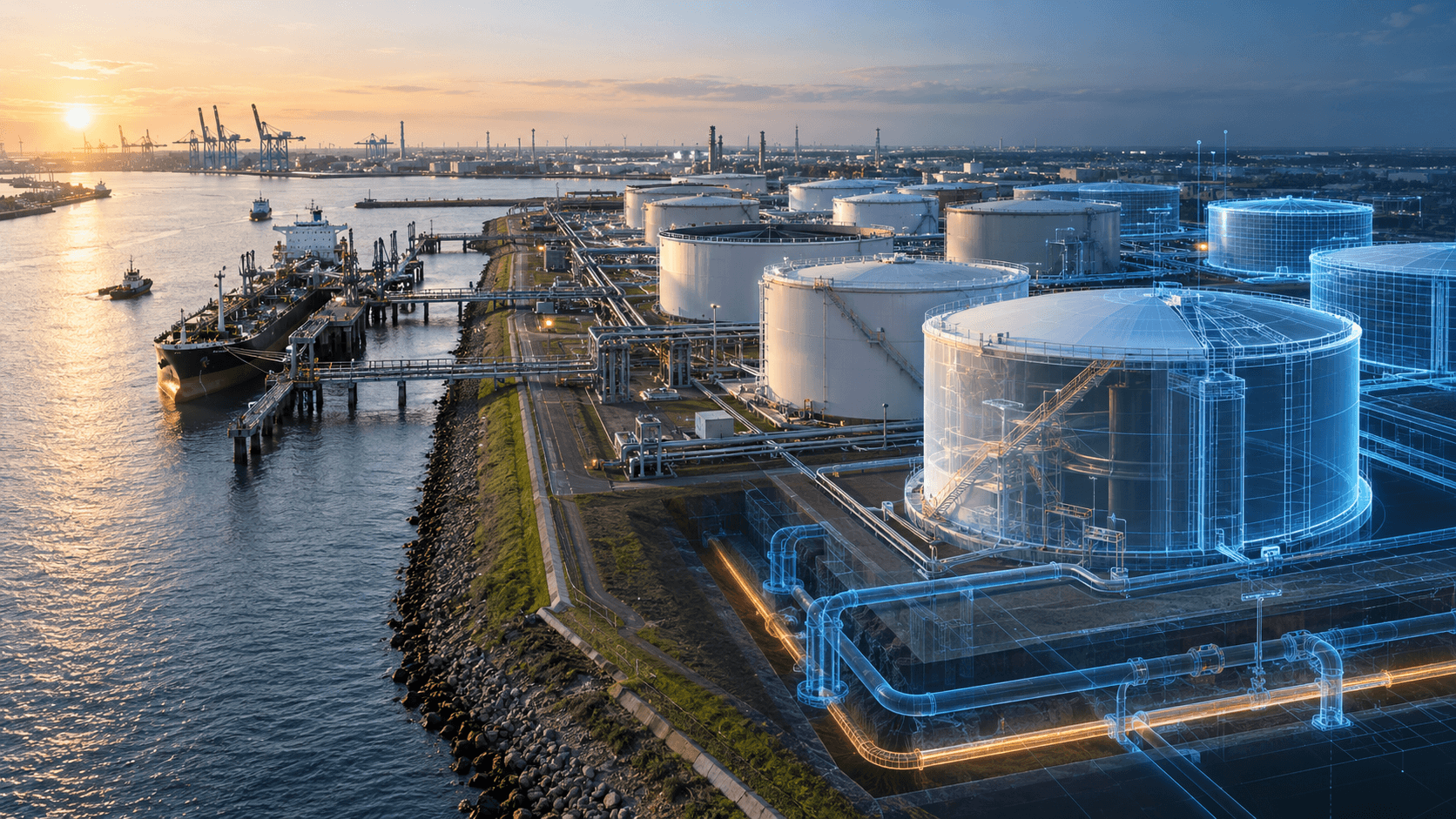
The terminal needed to introduce PFAS-free foam into an existing firefighting system. Unknown flow behaviour created uncertainty around pressure loss, pump loading and the modifications that might be required — delaying important investment decisions.
Scenario analyses showed pressure loss, pump loading and system behaviour before changes were made.
The terminal could see which technical changes were actually necessary for the new foam.
Engineering choices could be assessed before spending money on pumps, foam, piping or other modifications.
The selected solution could be integrated safely into the existing system; the installation is now operating with a fluorine-free foam system.
SYSTEM PASSES
Demonstrate sufficient pressure and flow at critical points, including relevant blocked-route or alternative-route cases. The calculation package can support compliance management and fire-safety documentation.
SYSTEM FALLS SHORT
Compare targeted interventions such as wider pipe sections, alternative routing, extra pumping capacity for remote locations or proportioning changes — then verify the selected design.
Two-pager
Download the two-pager for the approach, the key questions and the evidence for your installation.